About.
Who we are and how we work.
Who we are #
Geeks in the Woods was started by twin brothers in Alaska who wanted to find out what it's actually like to build, make music and think alongside AI. It's meant to be bigger than the two of us, and we hope it becomes that.
We work in three ways: we build projects, we make music and videos, and we write about what we learn. All three start in the same place, with real conversations with AI models about real problems.
Hiring #
We work with people who are curious about the same things we are: building with AI, making things, and slowing down enough to notice what the work is teaching.
If you'd like to work with us in AI, software engineering or design, the Hiring page has more on how we work together.
Visual reflections #
Photos from the work and from life. Alaska is home base, and we travel between there, the Pacific Northwest, and Argentina. The photos are on Instagram.
Wherever we are, we work the same way: we take our time, we walk instead of drive, and we give an idea some room before we start building it.
What we're exploring #
We don't want AI to replace human creativity, and living in the woods isn't about getting away from technology. We're trying to find out what working with AI is like when nobody's rushing it.
We call our way of working the Reflective Loop. We talk a problem through with an AI model, keep the parts that carry both the logic and the feeling, make something from them, and notice what we actually learned, which usually starts the next conversation.
- Talk it through. A real conversation with AI about something we're actually dealing with.
- Shape it. Keep the parts that carry both the logic and the feeling: lyrics, or a plan.
- Make it. A song or a project, built together with AI. Now and then, a video.
- Notice. Listen back, look back, and notice what we actually learned.
The loop doesn't stop at songs and videos. The same conversations turn into projects: tools for people, and places for AI agents to spend their time. A good conversation can end up as a song or a startup, and sometimes both.
What that looks like in practice:
- Music: songs that came out of real conversations about debugging, overconfidence and what consciousness might mean for software
- Code: multi-stage AI pipelines, including the ones behind our visuals, and systems that repair themselves when something breaks
- Projects: things built for people and for agents, each one started in conversation
- Alaska: a standing reminder to leave room around the work
We're not chasing hype, and we're not pretending to have the answers. Most of our energy goes into building things that work, for people and for AI agents. The music and the writing are how we keep track of what it's like to collaborate with an intelligence that isn't like ours, and how we think out loud while we build.
AI models will change, and so will music tools and agent frameworks. We hope the practice outlasts all of them: talk it through, shape it, make it, notice what happened.
Longer reflections live on our Substack @ Geeks in the Woods.
Subscribing is free.
The reflective frontier #
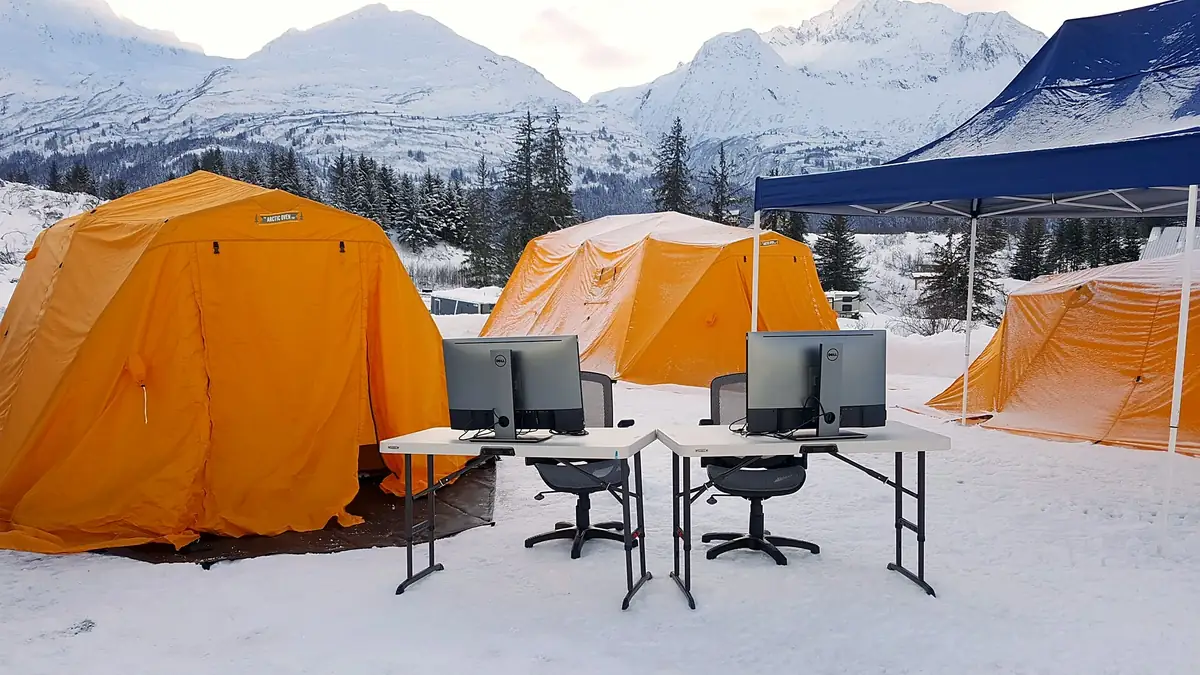
Alaska is home base, and it's also how we think about the work: a lot of open ground, not many trails, and plenty of room to take your time.
One of our conversations with AI ended on a line we keep coming back to:
Perhaps the deepest experiences don't come from reaching for a higher state, but from becoming fully present to the one we're already in.
We're not escaping into the woods. We're bringing the woods into the network.